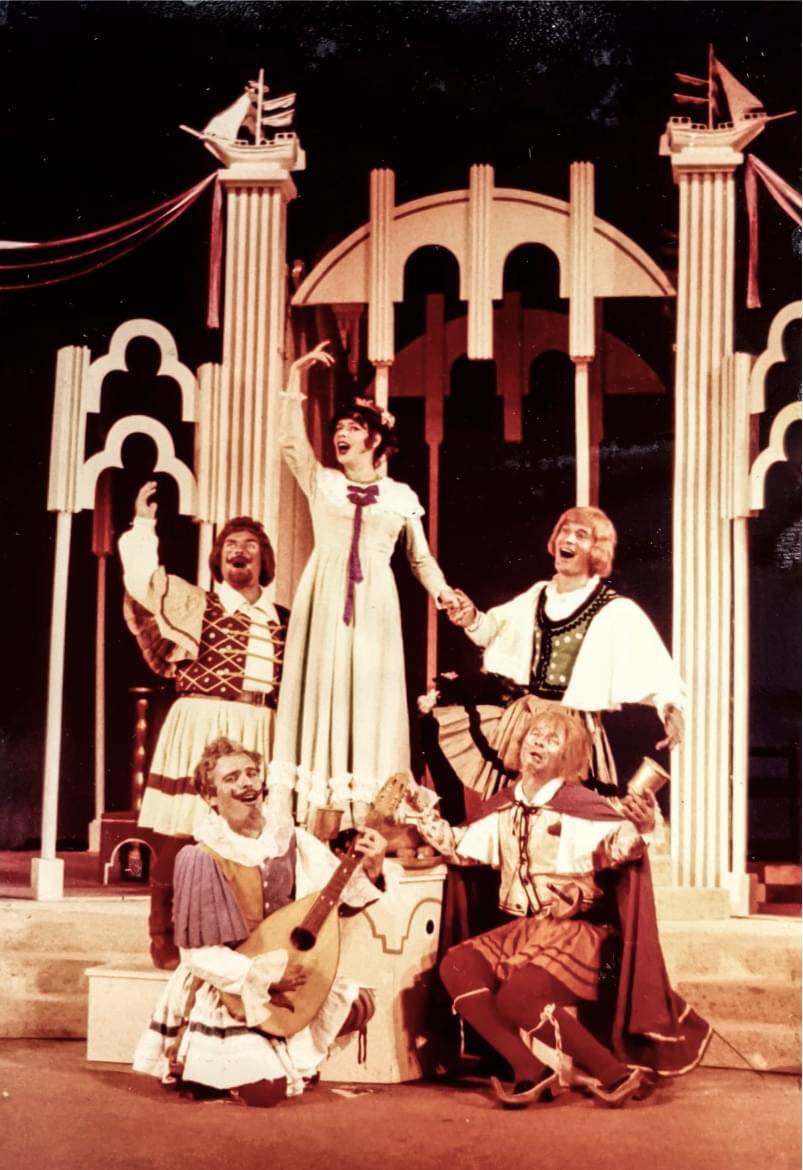
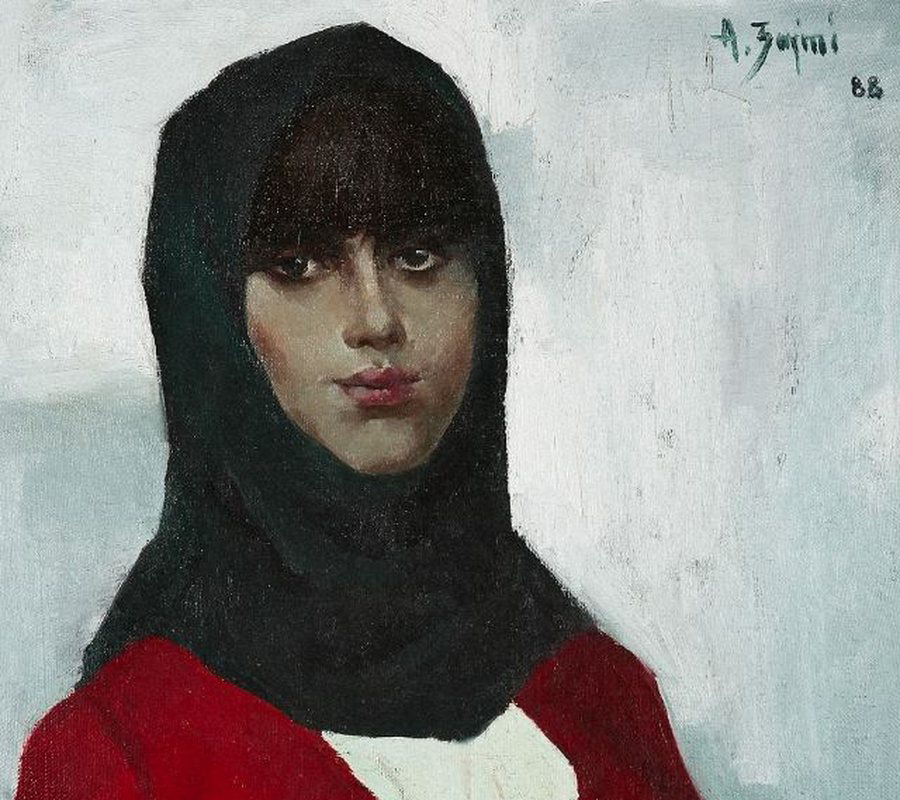
This article was originally published in Gazeta DRITA on May 17, 1987, and later republished by https://telegraf.al on November 21, 2020. It presents a conversation between actor Andon Qesari and renowned theatre director Piro Mani, reflecting on the historic collaboration between director Piro Mani and scenographer Agim Zajmi in staging the opera “Cuca e Maleve” (The Girl of the Mountains).
Learn more about Agim Zajmi in his biography.
…A Rare Artistic Collaboration
Ismail Kadare wrote about the opera: “a sphinx rises before the fate of men — the Ancient Kanun.”
“Cuca e Maleve,” a drama by playwright Loni Papa, entered the finest tradition of Albanian theatre, distinguished not only for its compelling dramaturgy but above all for its directorial interpretation.
The production ranked among the most successful performances of the National Theatre and was followed with particular interest by thousands of spectators over a long period of time.
What path did director Piro Mani and scenographer Agim Zajmi follow in bringing it to the stage?
This question is explored through a conversation with “Artist of the People” Piro Mani, focusing more on the theatrical spectacle than on the drama itself, which had already received extensive critical attention….
…“Is This a Coincidence or Something More?”
AQ – Who do you mean by “we”?
PM – Agim and I, co-authors and collaborators in many other works.
AQ – Is this a coincidence or something more?
PM – Certainly not. With Agim, as the saying goes, “the star shines” — our taste and temperament shine together. This harmony is essential in the performing arts, where many creators collaborate. Without an ideological and aesthetic unity between directing and scenography, one cannot claim a true directorial discovery.
A director may conceive many ideas, based on a dramatic work and enriched with internal vision — characters, mise-en-scène fragments, lighting, sound, countless details — yet still fail to embody the idea through theatrical language. This is because an idea, and the discovery that accompanies it, requires scenic space.
As Proust once suggested, the stage is like a stadium for a football player; without that defined space — with its rules, proportions, and structure — mastery cannot be demonstrated. Thus, scenography must possess the same depth of engagement with the work as the direction itself…
…The Birth of the Concept
AQ – Who first conceived the idea behind the staging?
PM – I cannot say it was mine alone; if you ask Agim, you will receive the same answer. As I emphasized earlier, creating a performance is a collaboration. It is the result of many artists — actors, scenographers, composers, lighting designers. The directorial concept emerges from dialogue, sketches, sleepless nights, and debates between director and scenographer. It is never the creation of one alone; rather, both inspire one another….
Read more on https://telegraf.al
For inquiries regarding available works by Agim Zajmi, please contact us.